News
Recent advances in cardiovascular biomarkers: innovations in early detection, risk prediction, and treatment monitoring
Aug 05, 2026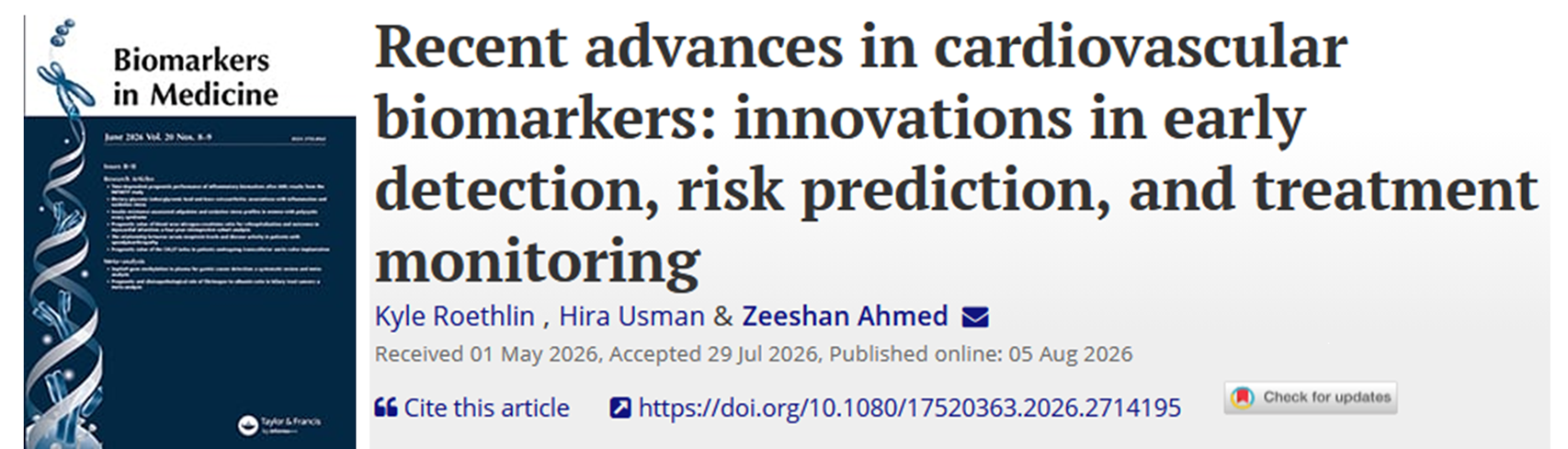
Our latest study, “Recent advances in cardiovascular biomarkers: innovations in early detection, risk prediction, and treatment monitoring“, published in Biomarkers in Medicine.
Cardiovascular disease (CVD) is a major source of morbidity and mortality across the globe. Effective screening and risk stratification of patients can improve long‑term outcomes by allowing physicians to offer fine-tuned advice and treatments. Advances in technology have enabled the study of various biomarkers associated with CVD, allowing researchers to study the molecular processes underlying illness. In this study, we sampled recent advances in the application of Machine Learning (ML) techniques to transcriptome datasets of CVD patients in the hopes of progressing our understanding of underlying pathophysiology, improving our ability to detect disease, and refining our methods of risk stratification of patients. These studies suggest that ML algorithms may help identify complex relationships within high-dimensional datasets to isolate relationships within datasets that were previously missed, enhancing our understanding of disease. However, there are several challenges that need to be addressed before these innovations can reach the clinic. Researchers must verify their results via means that are readily obtainable for physicians and must adequately identify the indications for a particular test so they can integrate into preexisting workflows. We offer potential solutions and suggestions to these issues so that these approaches may eventually contribute to improved patient care.
Article:
- Roethlin, K., Usman, H., & Ahmed, Z.* (2026). Recent advances in cardiovascular biomarkers: innovations in early detection, risk prediction, and treatment monitoring . Biomarkers in Medicine. 1-9. PMID: 42554418. (Taylor & Francis).